
Constraints and Opportunities
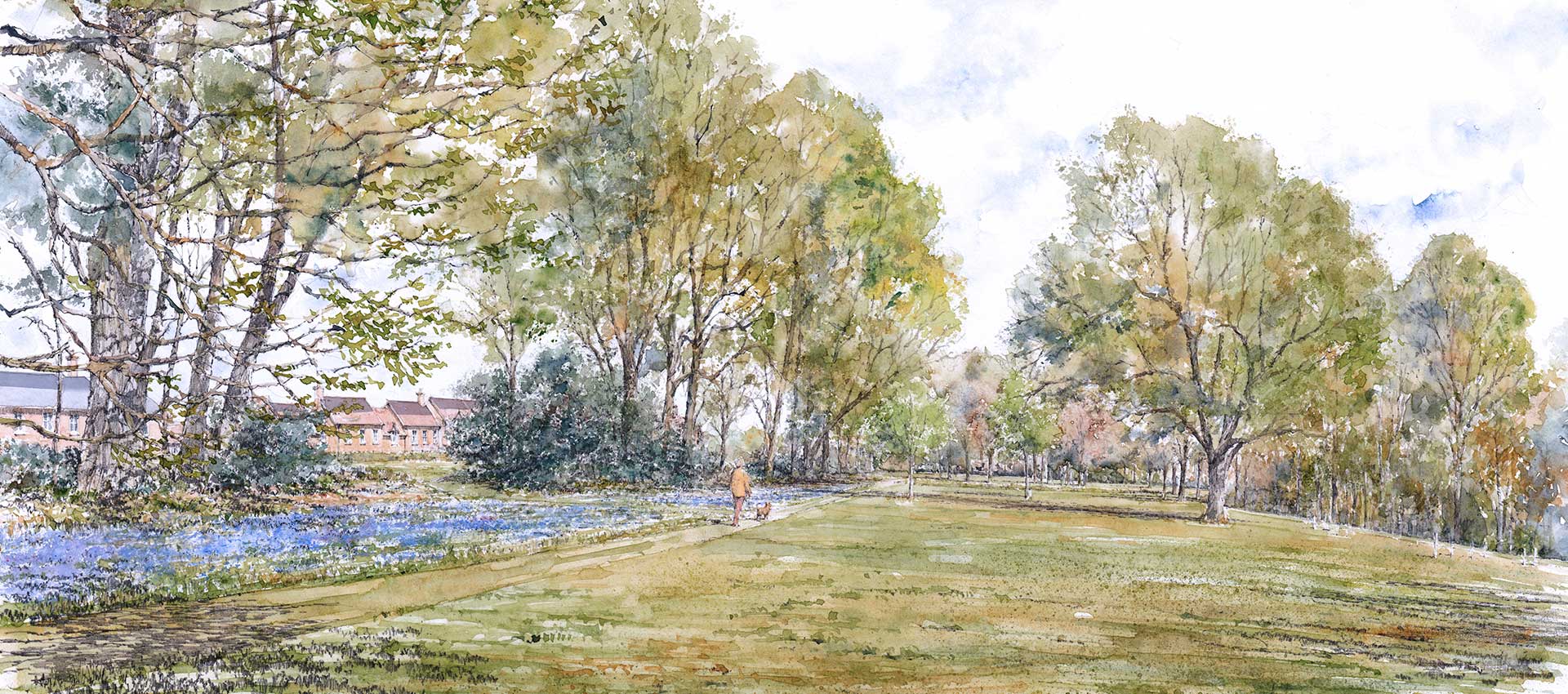
The identified constraints and opportunities allow for the creation of a distinct area that naturally extends the village. This can be achieved through thoughtful design, the layout of the new homes, landscaping, and both physical and visual connections.
Constraints and Opportunities Plan
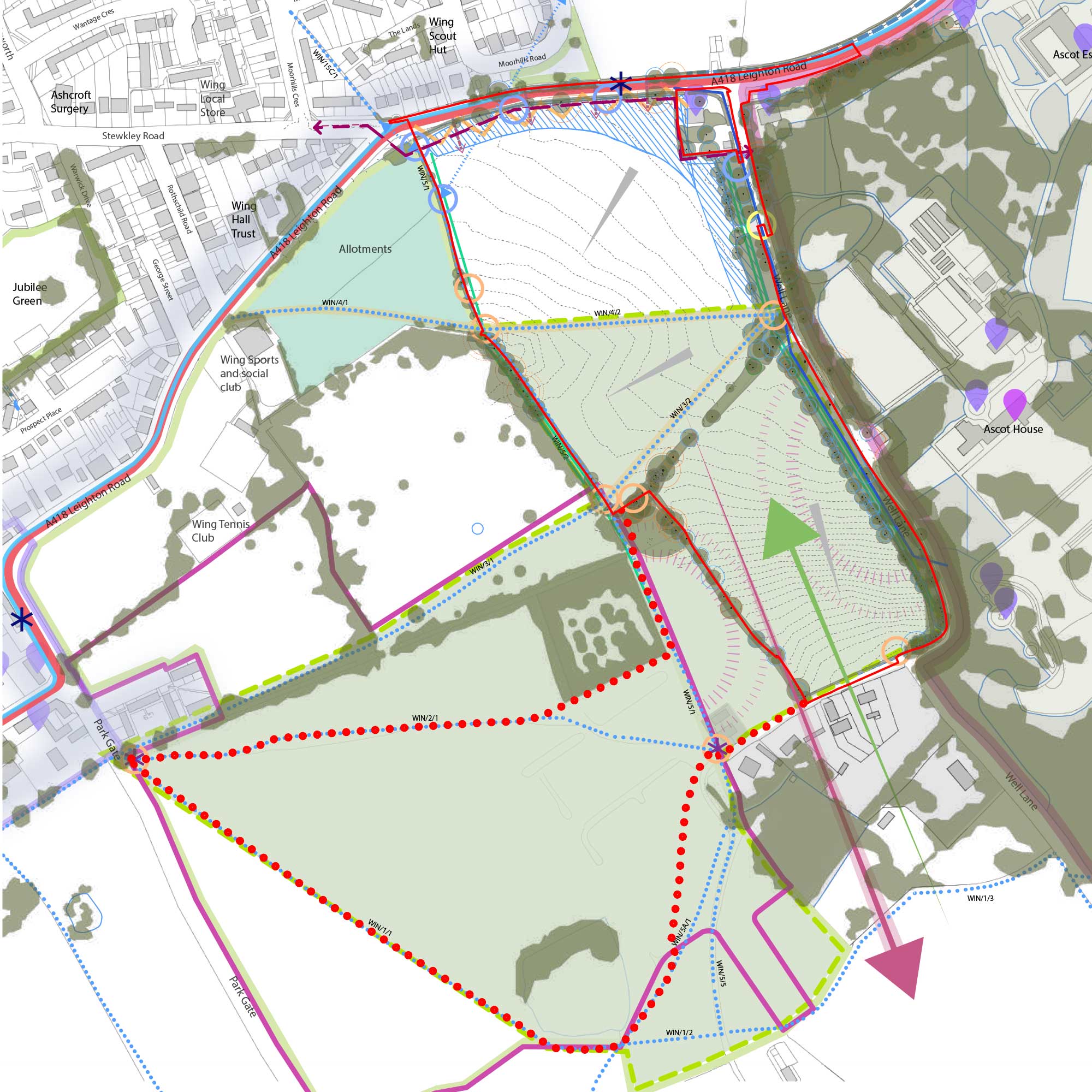

Site Boundary

SANG route

Primary roads

Bus route

Public rights of way

Opportunity to upgrade existing PROWs and footpaths

Existing bus stop

Leighton Buzzard cycleway

0.5m contours

Slope

Lakes and ponds

Existing trees and hedgerows with tree gradings

Local green space

Dense hedgerows & vegetation blocking views between site and park

Overhead power cables

Opportunity for SANG (approx. 2.3Km walking trail)

Sensitive site edge

Sensitive area exposed to distant views

Glimpsed views towards the site

Long range view to wider landscape setting & Mentmore towers

Sensitive area (proximity to scheduled monuments)

Conservation Area

Listed buildings (Grade I-II*-II)

Scheduled monument

Parks and Gardens Grade II*

Noise constraints

Edge of development

Existing and proposed vehicle access

Opportunities for pedestrian access

Existing pedestrian access

Foul sewer line

Location for heritage information boards

Existing tree canopy entents.png
Movement
The site is well located from a transport perspective, with existing bus stops located less than 300m walking distance from the centre of the site which are served by frequent cross-county bus services, providing connections to Milton Keynes and Aylesbury (service 100, 165, and the X4 cross-County). The proposed replacement bus stops on Leighton Road are only c. 100m from the centre of the built development. The site is also well located in the context of Wing itself, with the majority of facilities and amenities accessible within 1km.
Early engagement with Buckinghamshire Council Highways has been ongoing to understand the necessary sustainable travel infrastructure requirements for the site (walking, cycling, public transport), with Highways support for vehicular access to the site via a new priority junction onto Well Lane, utilising a proposed improved priority T-junction with the A418 Leighton Road.
Movement Plan
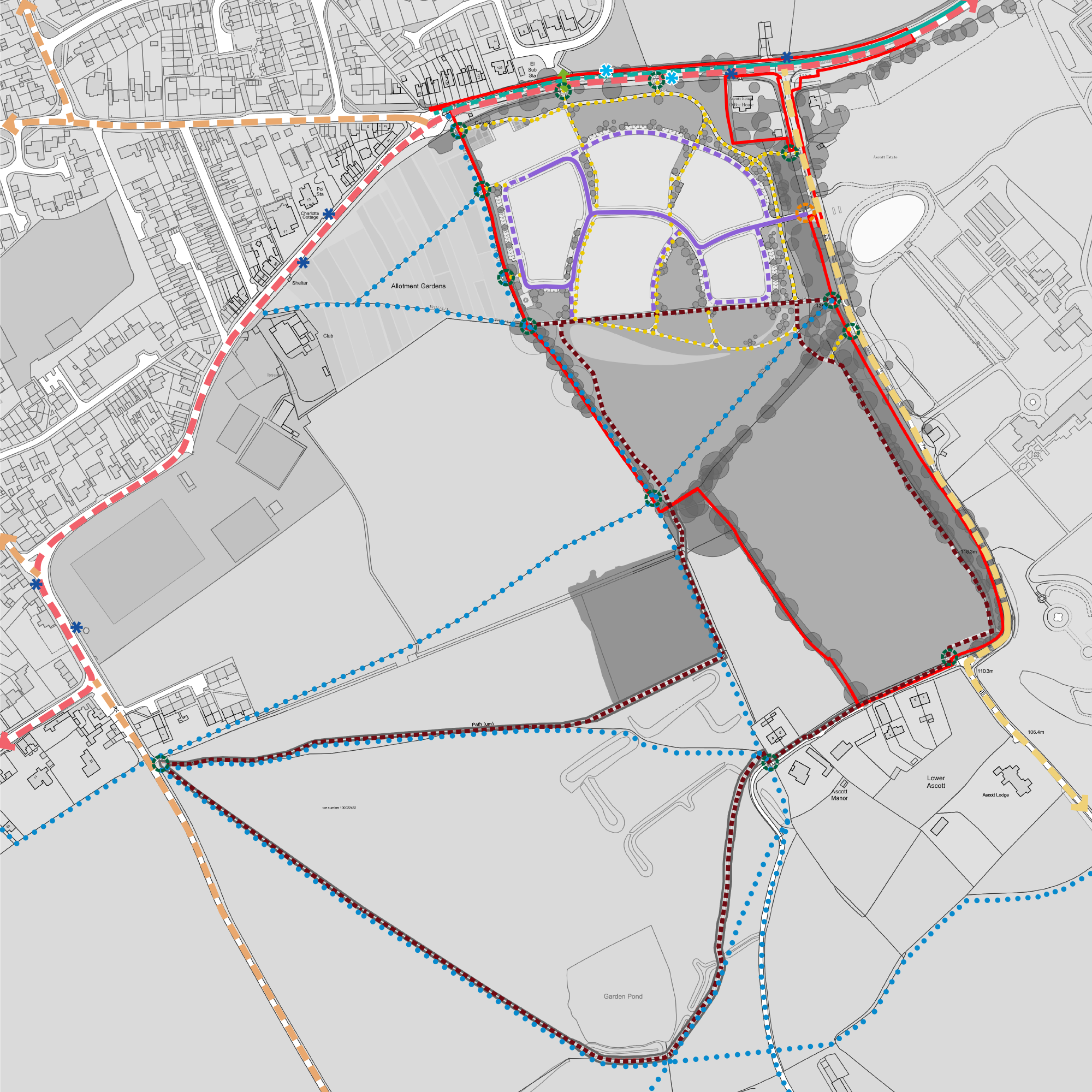
Site Boundary

Existing primary roads

Existing secondary roads

Existing tertiary roads

Existing bus stops

Proposed Bus Stops

Proposed pedestrian/cycle access

Proposed vehicular access

Proposed toucan crossing

Existing Leighton Buzzard cycleway

Proposed improvements to cycleway

Existing footpaths

Proposed footpaths

Proposed SANG route

Proposed traditional carriageway

Proposed shared surface
Site Access Plan
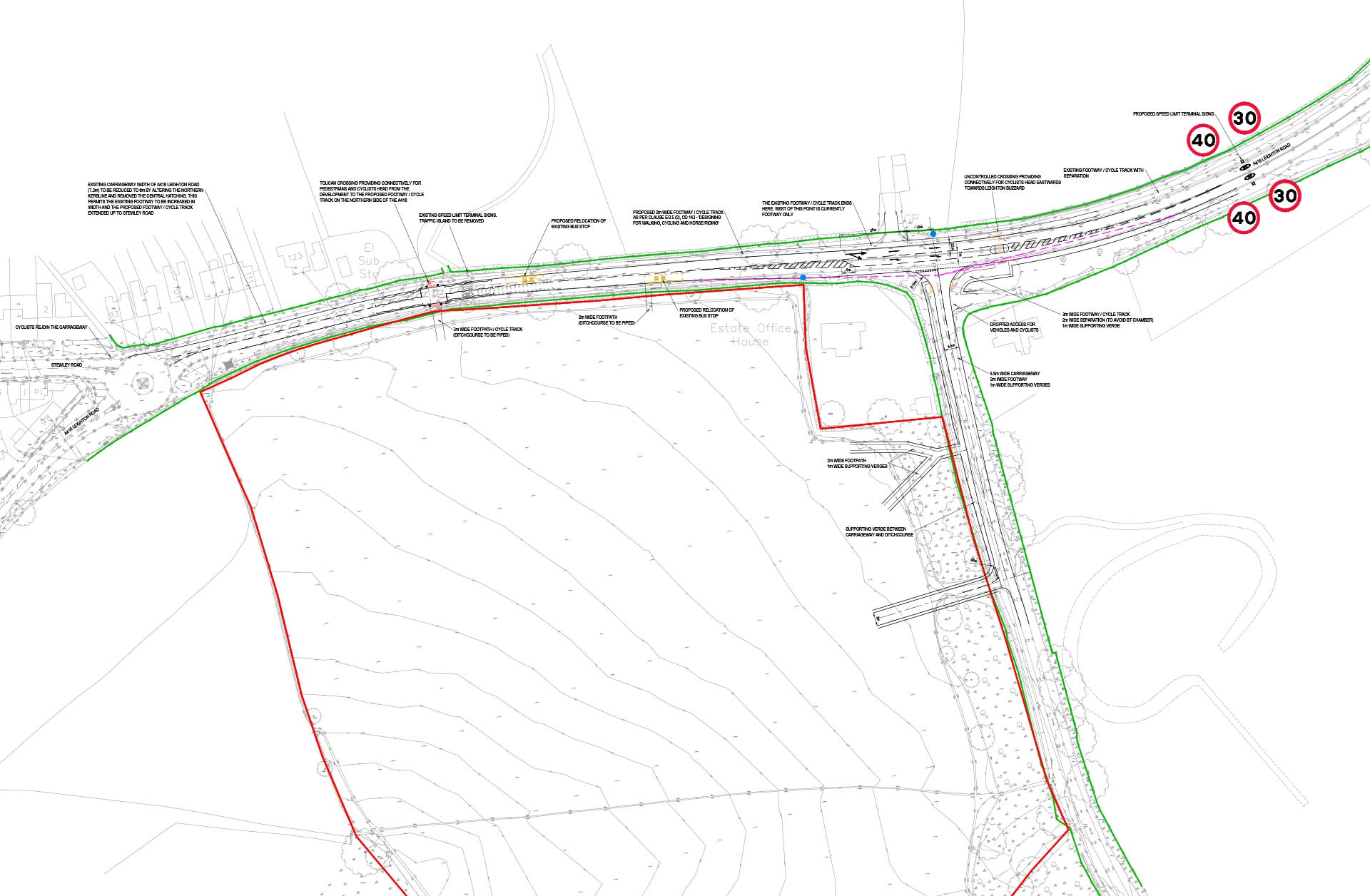

Highway boundary

Site boundary

Junction visibility splay 'x' = 2.4m, 'y' = 90m (Design speed = 60kph)

Existing bus stops
Drainage
A Flood Risk Assessment for the site is being completed as part of the planning application, and shows that, based on Environment Agency flood mapping, the site is located outside of areas of flood risk.
To ensure that the proposed development does not cause any further flood risks, Sustainable Drainage Systems (SuDS) will be implemented throughout the site as part of the drainage strategy.
SuDS play an important role in managing surface water by mimicking natural drainage processes and contributing to the climate resilience of the proposals. It is proposed that as part of the SuDS design, swales and infiltration basins will be utilised – whose role is to retain any rainwater generated within the site and then release it back into the surrounding area in such a way as to mimic the existing arrangement. The swales and basins will be open and are designed to provide storage, water treatment and amenity benefits to the surrounding area.
All drainage is designed to accommodate all storms up to and including the 1 in 100 year (1% probability) plus climate change events, in accordance with national guidance.
As part of the planning process, Davidsons Homes will engage with the Lead Local Flood Authority, Highways and Anglian Water to ensure that all proposed drainage is adequate and meets local requirements.
Foul drainage generated within the site will be conveyed via pipes through the development to a pumping station, which will then pump the water to an existing Anglian Water foul manhole within the site.